
Traffic Warrants in Marion County
A Marion County traffic warrant is a court order, often linked to nonappearance or an unresolved citation. Arkansas Online Court Payment warns that if a person neither pays before the court date nor appears, the court may issue a failure-to-appear warrant. That warning describes a possible process. It does not prove that any one citation now has a warrant.
Marion County District Court handles traffic matters through county and city docket channels. Rural county tickets, Yellville, Flippin, and Bull Shoals each have their own contact route. The correct docket, not the place name alone, controls what the person must do next.
Marion Traffic Warrant Query Fields
The Arkansas Online Court Payment citation query requires the court, first and last name, plus either a citation number or a driver-license or state-ID number with date of birth. It is designed to locate eligible citations for court payment. It is not a public live-warrant database.
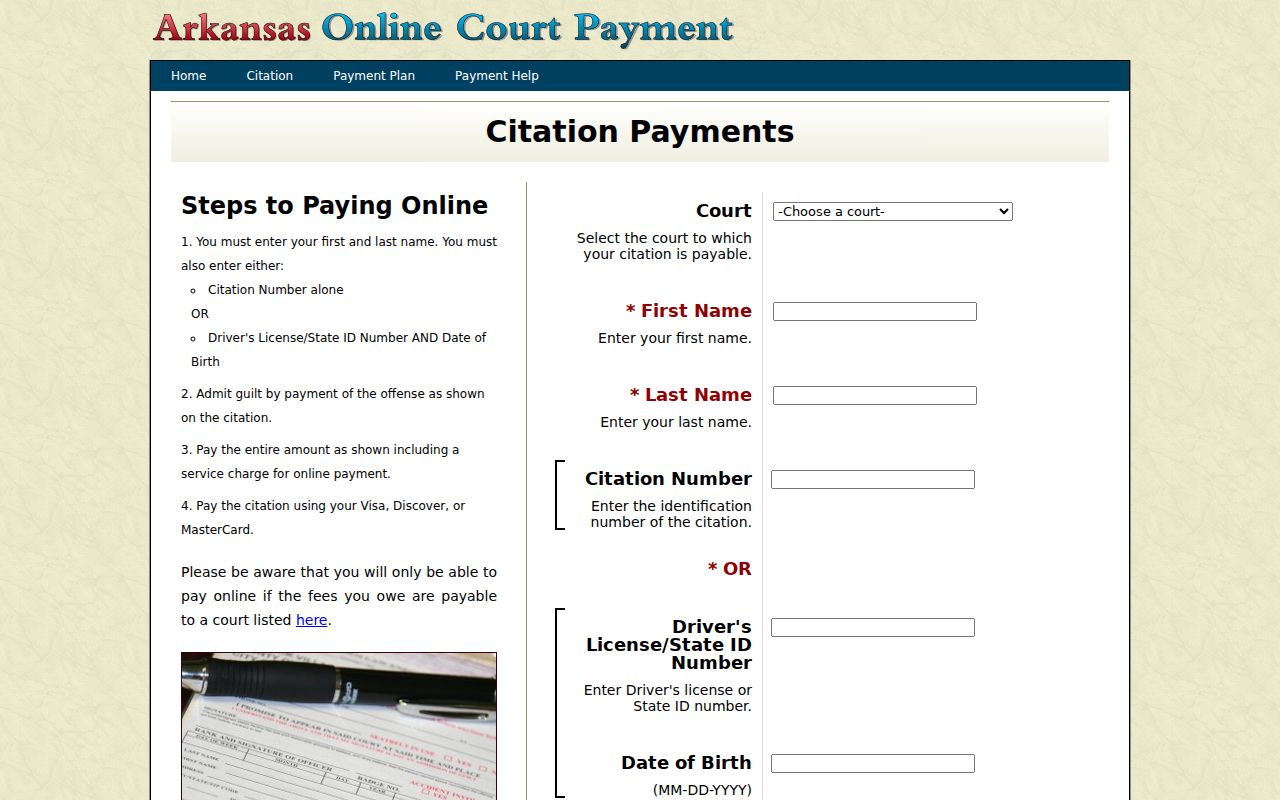
Use the citation number when possible, select the correct Marion County docket, and write down the result. If the citation does not appear, call the court rather than treating the empty search as warrant clearance.
Write down the exact court selection shown. A Yellville City matter and the county docket use different clerks even though both sit within the local District Court structure. Matching that label before calling reduces the risk of acting on the wrong case.
How to Check for a Traffic Warrant
No single Marion County online traffic-warrant list was located. Start with the ticket, notice, or public case record. Use the citation query only as a locator. Then call the docket clerk and ask whether an FTA warrant, failure-to-pay order, or license-related notice exists. The sheriff at 870-449-4236 can provide local warrant information and help identify the issuing court.
- Identify whether the ticket is rural county, Yellville, Flippin, or Bull Shoals.
- Use the official citation query or Search ARCourts to locate the record.
- Call the docket clerk with the citation or case number.
- Ask whether a warrant, FTA entry, or license process exists.
- Confirm the required court action and later status.
Four Marion Traffic Warrant Routes
Local routing is specific. Rural Marion County tickets use 870-449-6030. Yellville tickets use 870-449-6581. Flippin matters use 870-453-8300, while Bull Shoals uses 870-445-4775. Call before traveling because official sources show address and payment differences.
| Ticket route | Phone | Online context |
|---|---|---|
| Rural Marion County | 870-449-6030 | County court directions |
| Yellville | 870-449-6581 | County-directed court portal |
| Flippin | 870-453-8300 | City-linked eCourtPay |
| Bull Shoals | 870-445-4775 | City verification first |
Pyatt and Summit had no separate official city traffic portal located. Their residents should call the sheriff and ask which docket issued the matter.
What a Traffic Warrant Shows
A traffic-warrant record is tied to the court case or citation. The visible details may differ between a citation query, a public docket, and the sheriff's warrant record. Capture the court and number first. Those fields let the clerk find the correct matter without relying only on a name.
The sheriff's FAQ says a local warrant inquiry may return the warrant date, charge, bond amount, and issuing court. A citation portal may instead show the traffic allegation, balance, and payment eligibility. One interface does not replace the other. When fields conflict, use the record number to ask the issuing court for its current docket and order.
The docket name is especially important in Marion County. Rural county tickets use the county clerk route, while Yellville, Flippin, and Bull Shoals have separate public numbers. A Pyatt or Summit resident may still have a matter assigned to one of those documented court channels. Ask where the citation was filed, which date was missed, whether the warrant is active, and whether the court requires an appearance. Do not infer the court from a mailing address or from the community where an officer made the stop.
Save the original citation and every later notice. Compare the legal name, court, citation number, case number, and event date before discussing payment. Those fields help the clerk distinguish a citation balance from a separate warrant or FTA entry. If a vendor page shows no eligible payment, return to the court. An empty vendor result does not resolve the case or establish that no warrant exists.
| Citation or case number | OFFICIAL RECORD NUMBER |
|---|---|
| Original matter | Traffic offense or ordinance |
| Issuing court | County or city docket |
| Event | Appearance, FTA, payment, or later order |
| Status | Confirm directly with the court |
Marion Traffic Warrant Payment Portals
The county-directed District Court portal provides routing for Yellville and district matters. It should be treated as a court and citation path, not proof that a separate warrant is active or recalled.
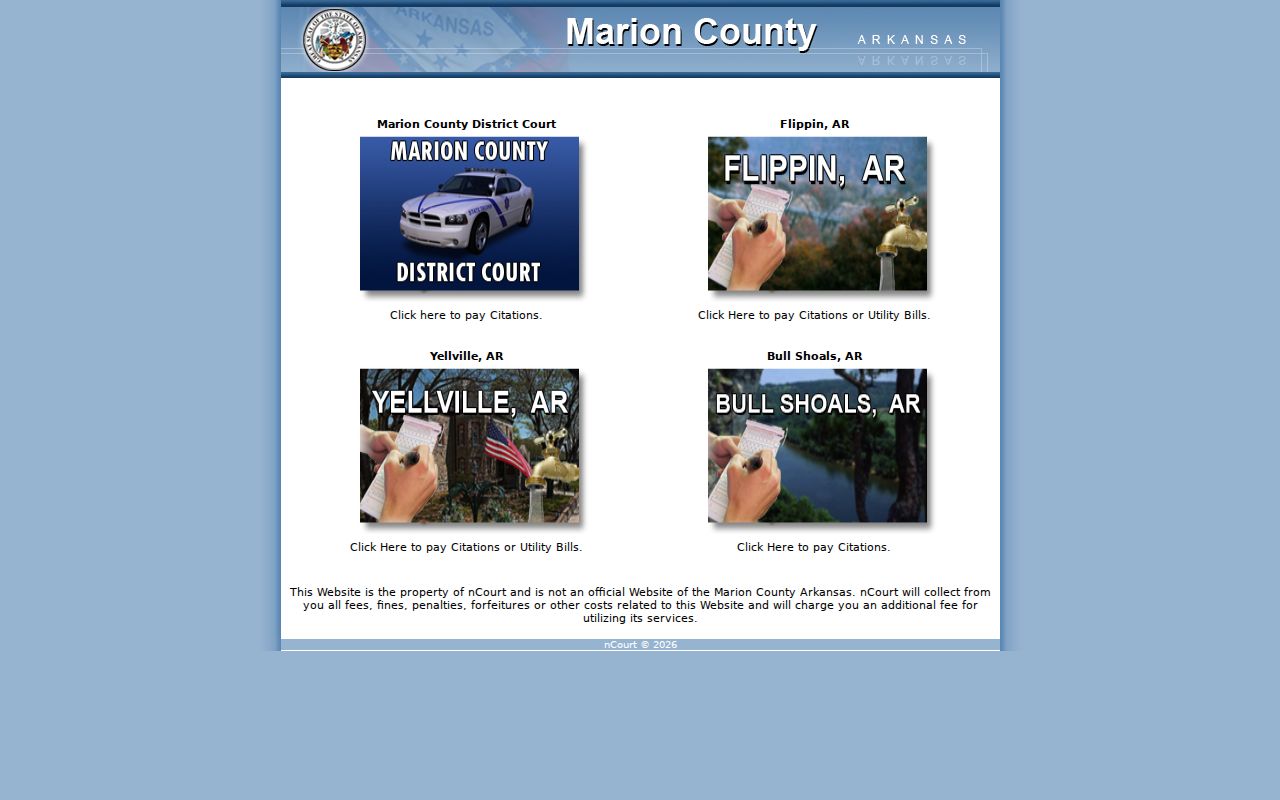
Flippin links eCourtPay, and county material also directs some payments to myFinePayment. Reach payment services from an official court or city page, then call the clerk to verify what the transaction changes.
Flippin also permits payment in person at the city court clerk's office and by mail. Bull Shoals asks payers to have the ticket number, case number, court date, and amount ready. These are payment routes only. Each clerk must still answer whether the warrant remains open and whether appearance is required.
Paying or Lifting a Traffic Warrant
Payment and warrant recall are separate questions. The county page lists cash, money order, and debit or credit options at District Court. Sheriff payment directions list cash, check, and money order, with online or phone card payments routed to a vendor. A vendor fee is not a Marion County warrant fee.
Arkansas Online Court Payment says full payment admits guilt or no contest and waives appearance and trial. Ask the court about available choices before paying. The research does not establish that every Marion County traffic warrant can be lifted online, that each docket offers a payment plan, or that a payment instantly reaches every law-enforcement system.
- Confirm the citation, court, warrant status, and amount.
- Ask whether payment, appearance, payment plan, or bond is available.
- Use only the route supplied by the official court.
- Save the receipt and request current warrant confirmation.
Before you pay: Full citation payment may waive appearance and trial. Ask whether a separate warrant still needs a court order.
Marion County Traffic Warrant Limits
Arkansas Criminal History, or ARCH, is a paid name-based criminal-history service. It is not a current Marion County traffic-warrant confirmation tool. ACIC and NCIC information is restricted to criminal-justice users, and no public statewide live-warrant search was found.
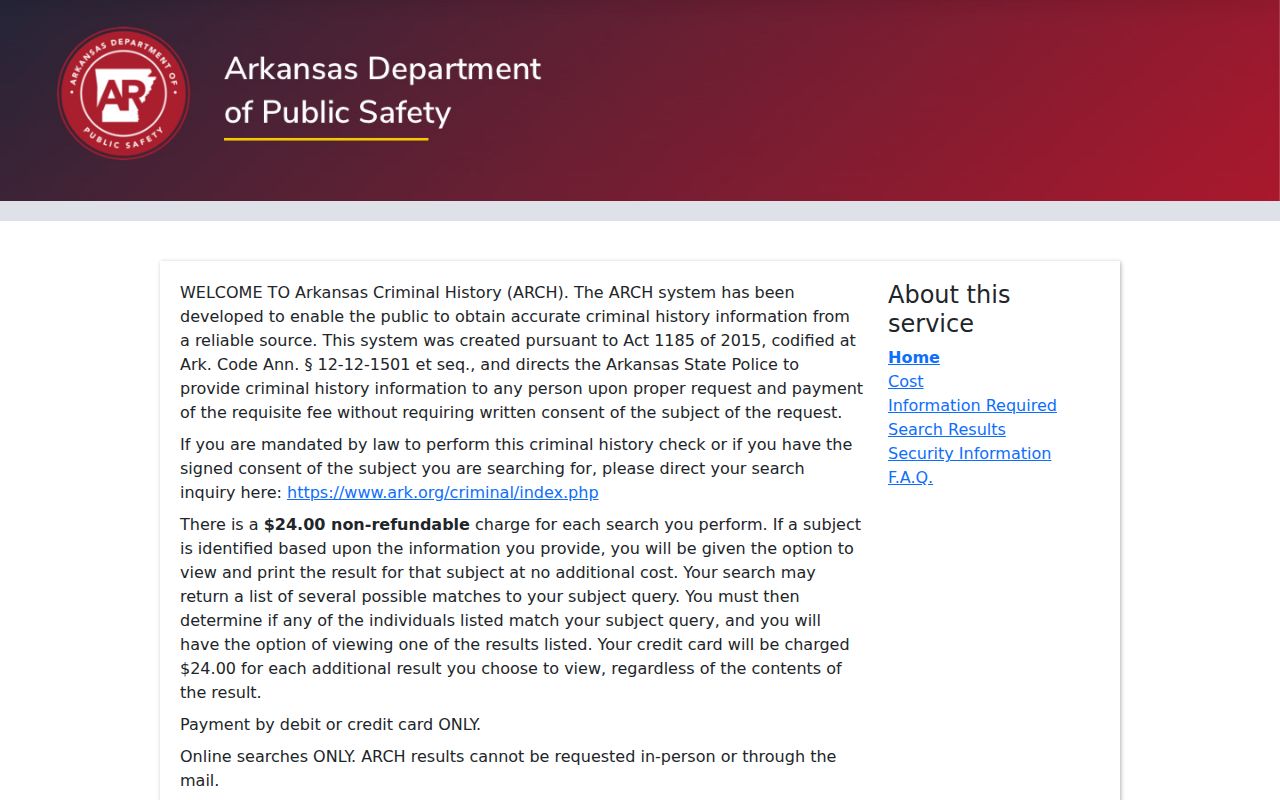
A traffic question should stay with the citation, court docket, sheriff, and issuing clerk. Do not substitute a broad history result for current court status.
Search ARCourts may locate public participant, filing, charge, disposition, event, judgment, and document information for participating courts. It is not legal notice or the official court record. District-court participation can vary, so a missing case or warrant event should lead to a clerk call, not a claim of clearance.
Traffic Warrant vs FTA and License Holds
These terms describe related but distinct events. FTA means the person did not appear as required. A judge may then issue a warrant. A license suspension or hold is a separate court and Department of Finance and Administration process. Resolving one item does not prove every other item has ended.
| Mechanism | What Triggers It | What It Does |
|---|---|---|
| Traffic warrant | Court action after an unresolved matter | Authorizes arrest |
| Failure to appear | Missed required court setting | Creates a docket event and may prompt a warrant |
| License process | Court notice and Arkansas DFA process | May suspend the driving privilege |
A court may distinguish failure to appear from failure to pay or failure to comply. Arkansas AOC materials use SF10 for an FTA warrant, while FTP and FTC describe different failures. Marion public materials do not use “capias pro fine” as the main consumer term. If a docket displays “capias,” ask that clerk to define what the order requires in the traffic case.
Keep the sequence clear. First resolve the court matter as directed. Next, ask whether the warrant has been recalled and whether the court sent a required notice to the Department of Finance and Administration. Finally, contact DFA about reinstatement if a suspension exists. A court receipt, warrant-status confirmation, and licensing notice answer different questions. None substitutes for the others.
Navigate Marion Traffic Warrant Results
The Search ARCourts navigation instructions explain how to move through public case results. Search by full legal name or a known case number, then note the court, event, and record number before calling.
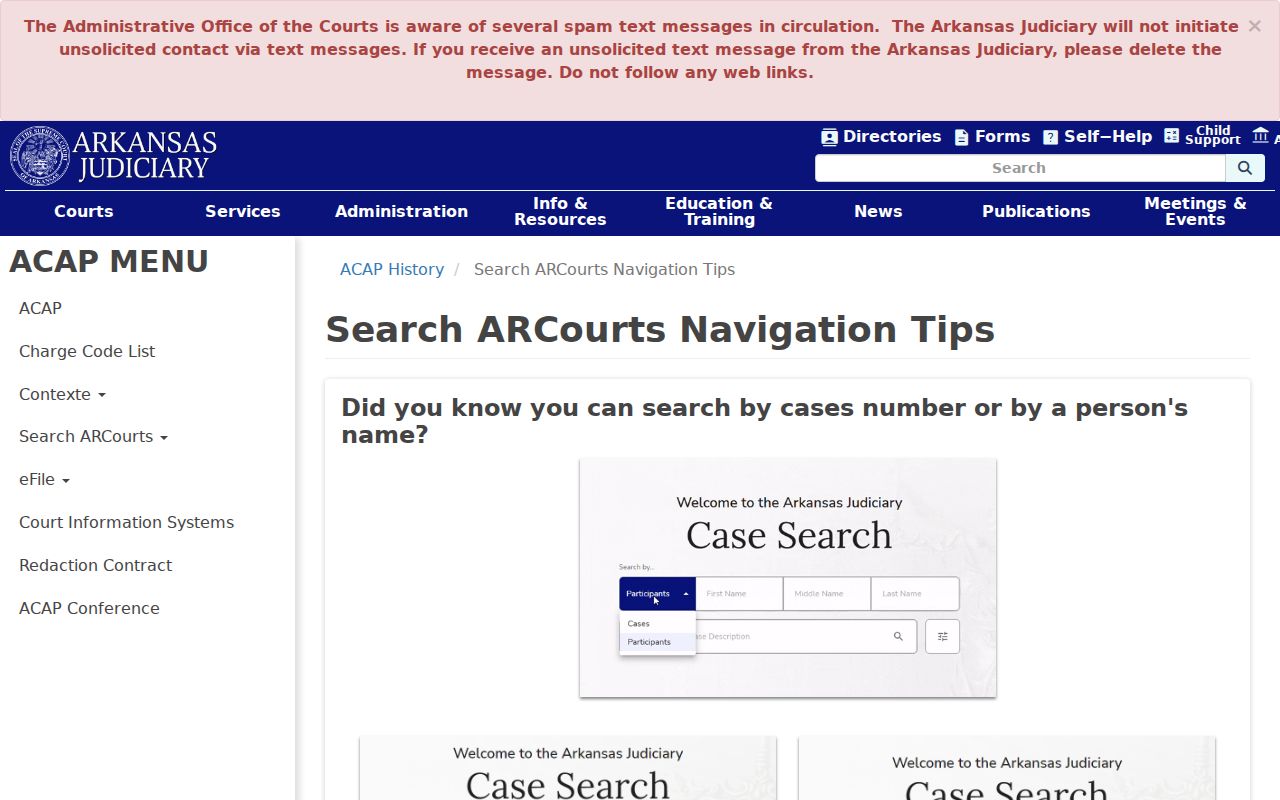
Public case data can lag, omit protected material, or vary by court participation. Use it to find the docket, not to certify that a traffic warrant has been cleared.
Before travel, ask the clerk to confirm the address, office hours, and whether the next step can be handled by phone, mail, online payment, or a court appearance. Keep the current official case number near every request.